Fakes and the Border: How Information Manipulation Affects Residents of the Khmelnytskyi Region
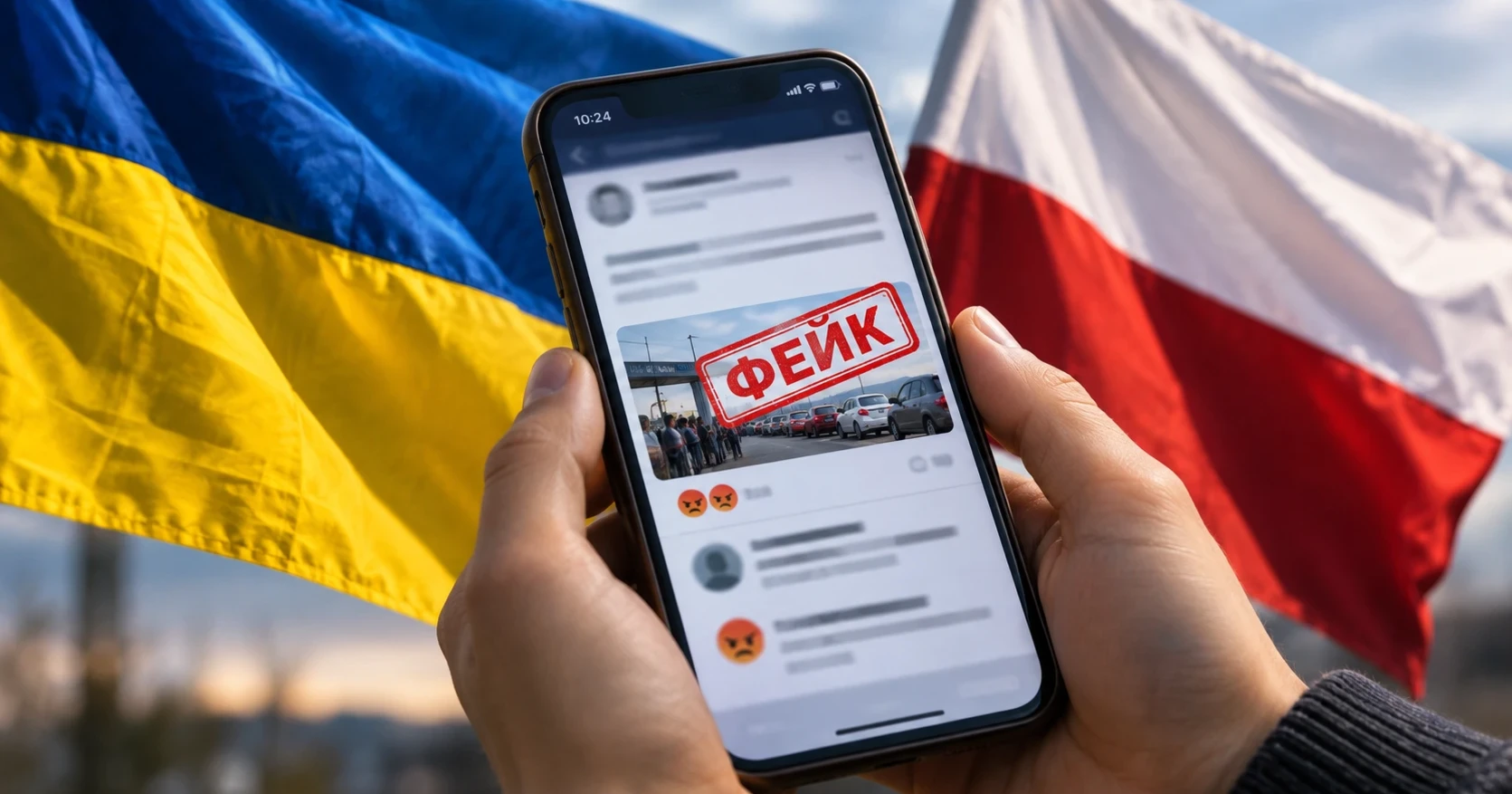
An analysis of resonant social media stories about crossing the Polish border and their impact on the perception of the neighboring country.
 🏙️City
Photo: horodok
Key points
- Impact of information manipulation on local residents
- Distinguishing private border incidents from systemic policy
- Official complaint mechanisms regarding border guard actions
The Information Impact of Neighboring Borders on the Region
For residents of the Khmelnytskyi region, the theme of relations with Poland holds both national and deeply personal significance. Decades of partnership ties, employment, education, and family connections have built strong interpersonal bridges. At the same time, emotional social media posts about alleged widespread humiliation at the border or mutual grievances frequently act as catalysts for tension, fueling distrust between Ukrainians and Poles.
A prime example is the spread of stories regarding isolated conflict situations during customs or border checks. In particular, a traveler's post about an allegedly biased attitude from a Polish border guard toward a lone driver's luggage caused considerable resonance. Such incidents are often generalized, creating a false impression of systemic hostility by an entire institution or nation toward Ukrainian citizens.
Where the Line Lies Between Personal Experience and Manipulation
Professional fact-checking requires a clear distinction between private negative experiences and objective reality. Polish legislation provides for strict inspection procedures, and while the human factor or potential overreach by individual employees does occur, it does not reflect the stance of the entire border service. Furthermore, official Polish authorities have repeatedly demonstrated readiness to assist Ukrainians in critical situations.
"If you encounter rude or humiliating treatment while crossing the border, you have the right to file an official complaint with the Main Headquarters of the Border Guard of Poland," analysts remind.
For locals, critical thinking when consuming news from social media serves as the best defense against manipulation. Understanding how isolated emotional accounts are turned into tools of discord helps maintain goodneighborly relations and avoid falling for hybrid-style provocations.
Source horodok — horodok.city/articles/486390/de-pravda-yak-fejki-siyut-nedoviru-mizh-uk… ↗
Read next
Fine for Tear Gas: Court Sentences Man for Attacking Police Officer During Document Check
In Ivano-Frankivsk, a man was fined 17,000 UAH for using a gas canister against a police officer during a conflict involving mobilization measures.
 🏛️Politics
Operation «Carthage»: New Version of Events Around NABU and SAPO Sparks Resonance
Following testimonies by SBU General Serhii Duka, experts suggest that a high-profile anti-corruption operation might have had entirely different motives.
 💼Economy
Parliamentary Temporary Inquiry Commission Uncovers Large-Scale Shadow Schemes in Gambling
The Verkhovna Rada's Temporary Inquiry Commission has reviewed the situation in the gambling market, uncovering multi-billion budget losses due to shadow schemes.
 💡Tech
WhatsApp Optimization: How Khmelnytskyi Residents Can Free Up Smartphone Storage
WhatsApp often duplicates media files, consuming valuable device storage, but simple setting adjustments can reclaim gigabytes of space.
 🏛️Politics
New Leadership at Ministry of Veterans Affairs: 'Azov' Officer and Former Minister Join the Team
The Cabinet of Ministers has appointed Oleksandr Husarov as Deputy Minister and Oleh Nemchinov as State Secretary of the Ministry of Veterans Affairs.
 🇺🇦Ukraine
Kerch Bridge Strikes: Putin Attempts to Downplay Damage
The Russian leadership has reacted to successful Ukrainian strikes on the Kerch Strait Bridge, attempting to minimize the evident damage to military logistics.